Professional Structural Mitigation & Environmental SafetyProperty disasters involving water or fire damage such as – clean water breaches, flash flooding, or fire suppression triggers demand immediate professional intervention to prevent permanent structural degradation. Within minutes of initial exposure, moisture migrates deeply into porous subfloors, interior drywall cavities, and structural framing members, creating the optimal microclimate for rapid microbial blooms and wood rot. Fire incidents introduce corrosive soot particulates and acidic ash that permanently etch glass surfaces, tarnish hardware, and contaminate indoor air handling loops within hours. At Tennessee Environmental Safety Group (TESG), our rapid-response structural mitigation protocols deploy advanced thermal imaging and scientific moisture monitoring to stabilize your asset and preserve your building’s structural integrity.Scientific Remediation & Advanced Drying ProtocolsOur standard operating procedures combine advanced mechanical drying with certified environmental protection systems. We utilize deep-cavity digital moisture mapping, industrial-grade low-grain refrigerant dehumidifiers, and high-velocity axial air movers to thoroughly dry hidden structural assemblies to strict IICRC standard baselines. Crucially, because water damage and smoke demolition can unexpectedly disturb hidden toxins in older properties, our certified W-2 technicians implement strict negative-pressure containment zones. This ensures that pre-existing environmental hazards, such as historic lead paints or legacy asbestos insulation, are never accidentally aerosolized or cross-contaminated through your property during the remediation process. From emergency extraction to final structural clearance certifications, we deliver clean, safe, and fully documented results.

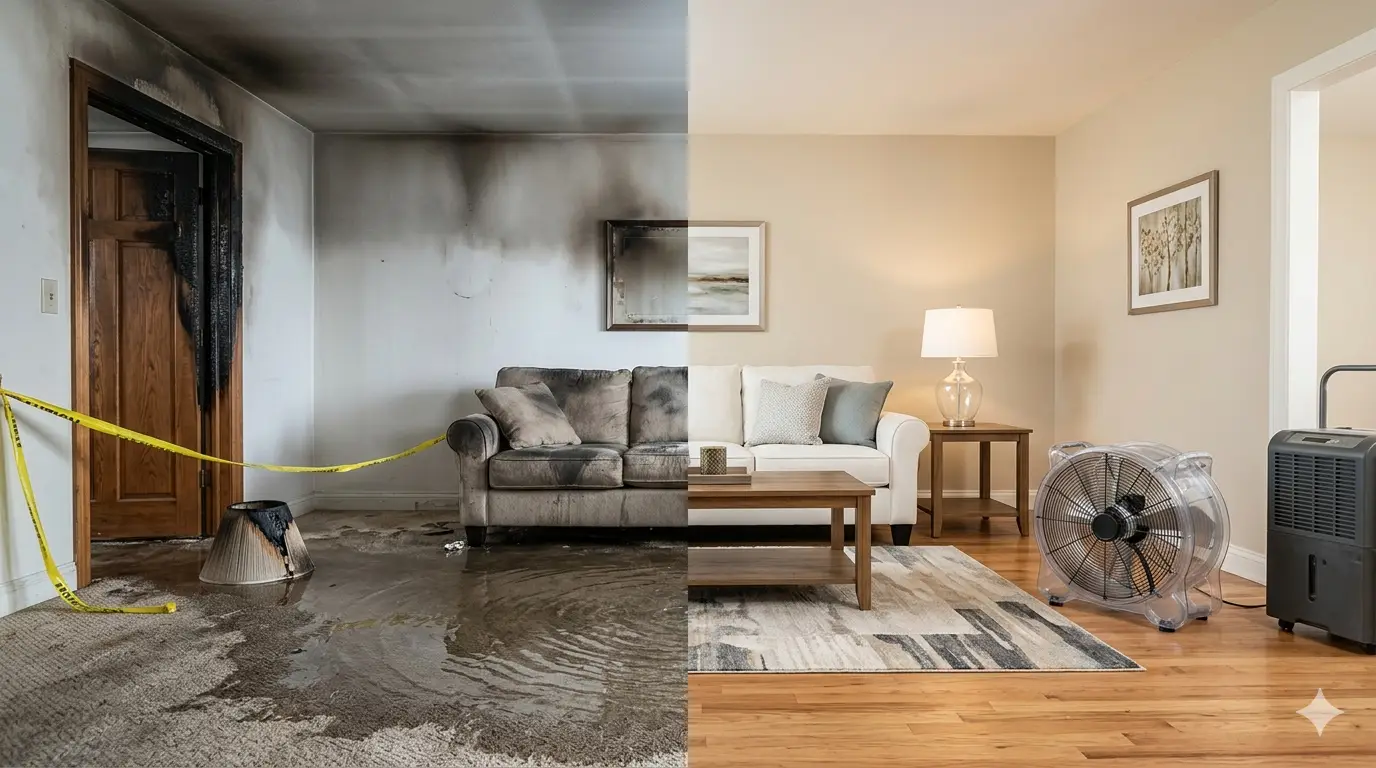
Secondary structural degradation and microbial growth initiate within 24 to 48 hours of initial exposure. Clean water rapidly migrates deep into porous assemblies like drywall, subfloors, and structural framing. If industrial-grade extraction and dehumidification are not deployed immediately, permanent wood rot can set in, insurance claims may be jeopardized, and toxic mold blooms will compromise your indoor air quality.
Household fans only circulate air across surface layers, completely failing to pull moisture out of hidden wall cavities, insulation, and deep structural framing. At TESG, we utilize advanced digital moisture mapping and low-grain refrigerant (LGR) dehumidifiers alongside high-velocity axial air movers. This scientific setup drops the relative humidity to target structural drying baselines, pulling trapped water out from behind your walls before permanent rot or mold takes hold.
Fire incidents introduce aggressive soot particulates, chemical residues, and acidic ash that tarnish hardware, etch glass, and completely contaminate ventilation infrastructure. We utilize strict negative-pressure containment zones and heavy-duty HEPA air scrubbers to isolate affected zones. This technical protocol completely strips micro-particulates and smoke odors out of the atmosphere, preventing the cross-contamination of unburned areas during structural cleaning.